

Lead Generation Strategies: Practical Ways to Generate High-Quality B2B Leads That Convert
Every business wants more leads. But after working with businesses across the UAE, GCC, and international markets since 2008, I’ve learned that generating more leads isn’t usually the real challenge. The bigger challenge is generating the right leads.
I’ve spoken with business owners who proudly tell me they collected thousands of contacts from exhibitions, online forms, or purchased lists. A few months later, those same businesses wonder why their sales team isn’t closing deals. The answer is often simple: the leads weren’t relevant, the data wasn’t accurate, or there was no clear follow-up process.
Lead generation isn’t about filling a spreadsheet with names. It’s about creating opportunities with businesses that are genuinely interested in what you offer.
In this article, I’ll share practical lead generation strategies that I’ve seen work consistently for companies of all sizes—from startups and SMEs to large enterprises. These are the same principles I’ve recommended to clients for years, and they continue to deliver results because they’re built on quality, consistency, and understanding your audience.
What Is Lead Generation?
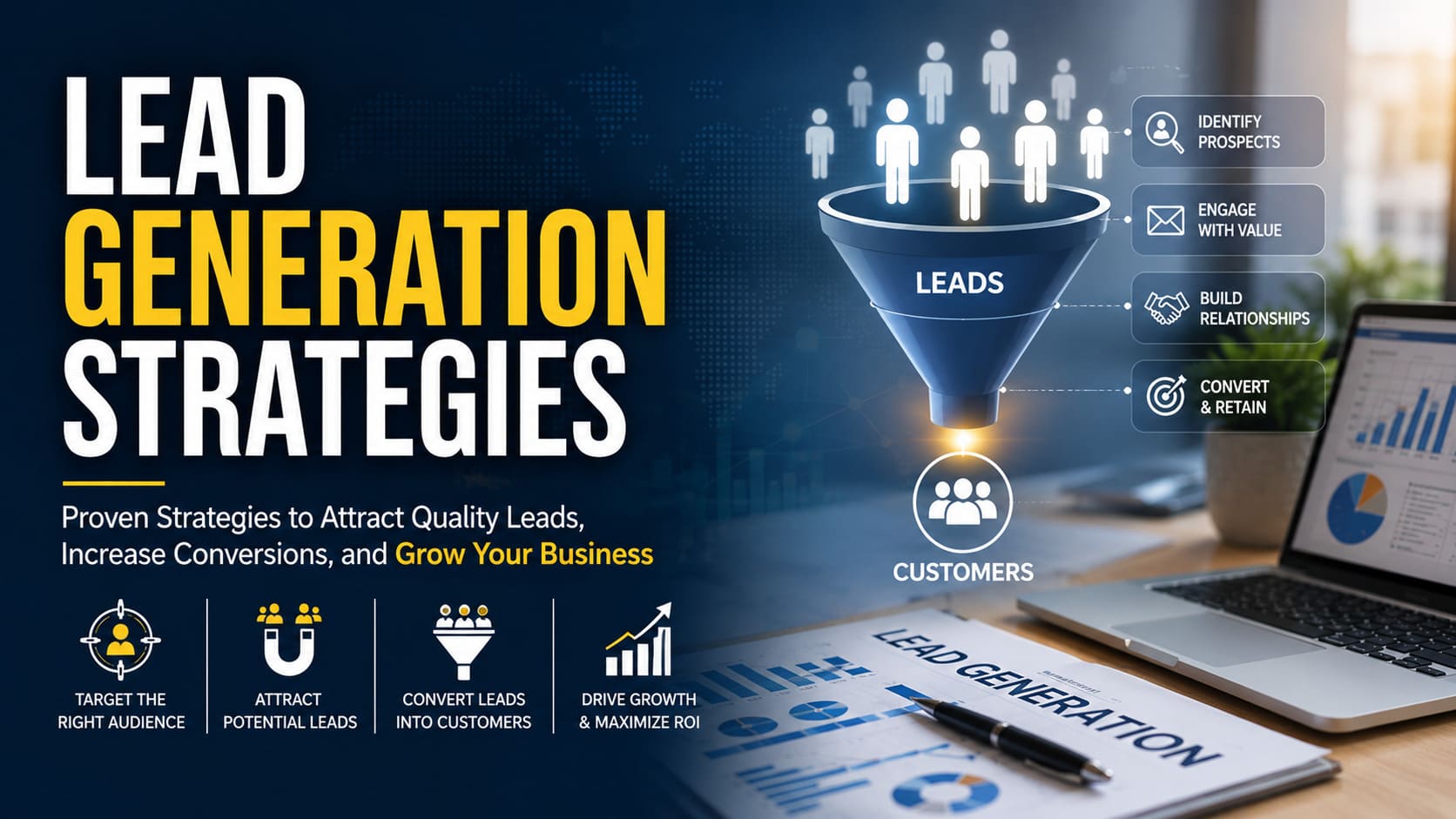
Lead generation is the process of attracting and identifying potential customers who may be interested in your products or services.
In B2B businesses, a lead could be:
- A company requesting information
- A decision-maker downloading a guide
- A prospect responding to an email
- A business owner scheduling a meeting
- A company filling out an inquiry form
The objective isn’t simply to collect contacts. The goal is to build relationships that eventually become customers.
Why Many Businesses Struggle with Lead Generation
One mistake I see repeatedly is businesses focusing on quantity instead of quality.
From my experience working with businesses across the GCC, one of the biggest challenges is finding accurate and up-to-date business contacts.
Without reliable business data, even the best marketing campaign can struggle.
I’ve also noticed companies investing heavily in advertising before defining their target audience. They generate clicks, but very few qualified inquiries.
Successful lead generation starts with understanding who you want to reach.
The Foundation of Effective Lead Generation
Know Your Ideal Customer
Before spending money on marketing, define your ideal customer profile.
Consider:
- Industry
- Company size
- Country
- Decision-maker role
- Business challenges
- Budget
- Buying behaviour
The clearer your target audience, the easier it becomes to create relevant campaigns.
Build a High-Quality Business Database
A quality business database is one of the most valuable assets a company can own.
Your database should include:
- Company name
- Contact person
- Job title
- Business email
- Phone number
- Industry
- Country
- Website
Over the years, I have seen many companies waste their marketing budget by using outdated databases.
An inaccurate database leads to bounced emails, missed opportunities, and frustrated sales teams.
Segment Your Database
Not every business has the same needs.
In my experience, companies achieve much better email marketing results when their database is properly segmented.
Instead of sending one message to everyone, organise contacts by:
- Industry
- Job role
- Country
- Business size
- Customer interests
Segmentation makes every campaign more relevant.
Proven Lead Generation Strategies
1. Email Marketing
Despite the rise of social media, email remains one of the highest-performing B2B lead generation channels.
The key isn’t sending more emails.
It’s sending relevant emails to the right people.
Helpful educational content almost always performs better than aggressive sales strategy and promotions.
2. Content Marketing
Businesses buy from companies they trust.
Educational content helps build that trust.
Create:
- Blog articles
- Industry guides
- Case studies
- Whitepapers
- Checklists
- Market insights
When prospects find value in your content, they become more likely to contact you.
3. LinkedIn Networking
For B2B businesses, LinkedIn continues to be one of the strongest platforms for lead generation.
Instead of immediately selling, start conversations.
Share useful insights.
Comment on industry discussions.
Build relationships first.
Sales usually follow.
4. Website Lead Capture
Your website should encourage visitors to take action.
Simple improvements include:
- Clear contact forms
- Downloadable resources
- Newsletter signup
- Live chat
- Strong call-to-action buttons
A website should work as part of your sales team, not simply as an online brochure.
5. Referral Marketing
Satisfied customers remain one of the best lead generation sources.
Encourage referrals by:
- Delivering excellent service
- Following up after projects
- Asking happy customers for introductions
Referral leads often convert faster because trust already exists.
The Importance of Data Quality
One common mistake I notice is that businesses focus only on collecting leads instead of maintaining data quality.
After working with businesses since 2008, I have learned that data quality is often more valuable than database size.
A smaller database filled with verified decision-makers usually produces better results than a massive list containing outdated information.
Businesses that regularly update their customer database usually see better conversion rates than those relying on old contact lists.
A Real Business Example
A real example from my experience is a company that increased qualified inquiries after switching from generic marketing lists to a targeted industry database.
Instead of emailing every available contact, they focused only on companies within their target market.
Open rates increased.
Response rates improved.
Sales meetings became more productive because every conversation was relevant.
This reinforces a simple lesson: better targeting produces better leads.
Common Lead Generation Mistakes
Buying Cheap Databases
Low-cost databases often contain:
- Invalid emails
- Duplicate contacts
- Old information
- Generic company addresses
Cheap data usually becomes expensive in the long run.
Ignoring Follow-Up
Many prospects won’t respond to the first email.
Consistent and professional follow-up is often where real opportunities begin.
Sending Generic Emails
Businesses receive hundreds of promotional emails every week.
Personalised messages stand out.
Research your audience before reaching out.
Measuring Only Lead Quantity
Success isn’t measured by how many leads you generate.
Measure:
- Qualified leads
- Conversion rate
- Cost per lead
- Sales opportunities
- Revenue generated
Quality metrics matter more than vanity numbers.
Practical Lead Generation Tips You Can Apply Today
If you’re looking for immediate improvements, start with these steps:
- Define your ideal customer profile.
- Clean your existing business database.
- Remove duplicate and inactive contacts.
- Segment your audience.
- Create educational email campaigns.
- Publish useful industry content.
- Follow up consistently.
- Use a CRM to track every lead.
- Review campaign performance every month.
- Update your database regularly.
Small improvements repeated consistently create long-term growth.
Final Thoughts
- Lead generation isn’t about chasing everyone.
- It’s about identifying the businesses most likely to benefit from your products or services and building genuine relationships with them.
- Many of our clients have significantly improved their lead generation simply by targeting the right industries instead of sending mass campaigns.
- Over the years, I’ve found that businesses investing in accurate customer data, consistent follow-up, and educational marketing almost always outperform companies relying on outdated lists or one-time promotional campaigns.
- If there’s one recommendation I’d make to every business, it’s this:
- Invest in data quality before increasing your marketing budget.
- The right database, combined with thoughtful communication and a clear strategy, will consistently outperform larger campaigns built on poor-quality data.
- Lead generation isn’t about reaching the most people.
- It’s about reaching the right people.
FAQ Section
What are lead generation strategies?
Lead generation strategies are methods businesses use to attract potential customers, generate qualified inquiries, and build a consistent sales pipeline.
Which lead generation strategy works best for B2B businesses?
Email marketing, LinkedIn networking, content marketing, referrals, and targeted business databases remain among the most effective B2B lead generation methods.
Why is data quality important in lead generation?
Accurate business data improves email deliverability, reduces wasted marketing spend, and helps sales teams connect with the right decision-makers.
How often should a business database be updated?
Ideally every three to six months to maintain accuracy and improve campaign performance.
Is email marketing still effective?
Yes. When combined with quality business data and proper audience segmentation, email marketing continues to deliver one of the highest returns on investment for B2B companies.